
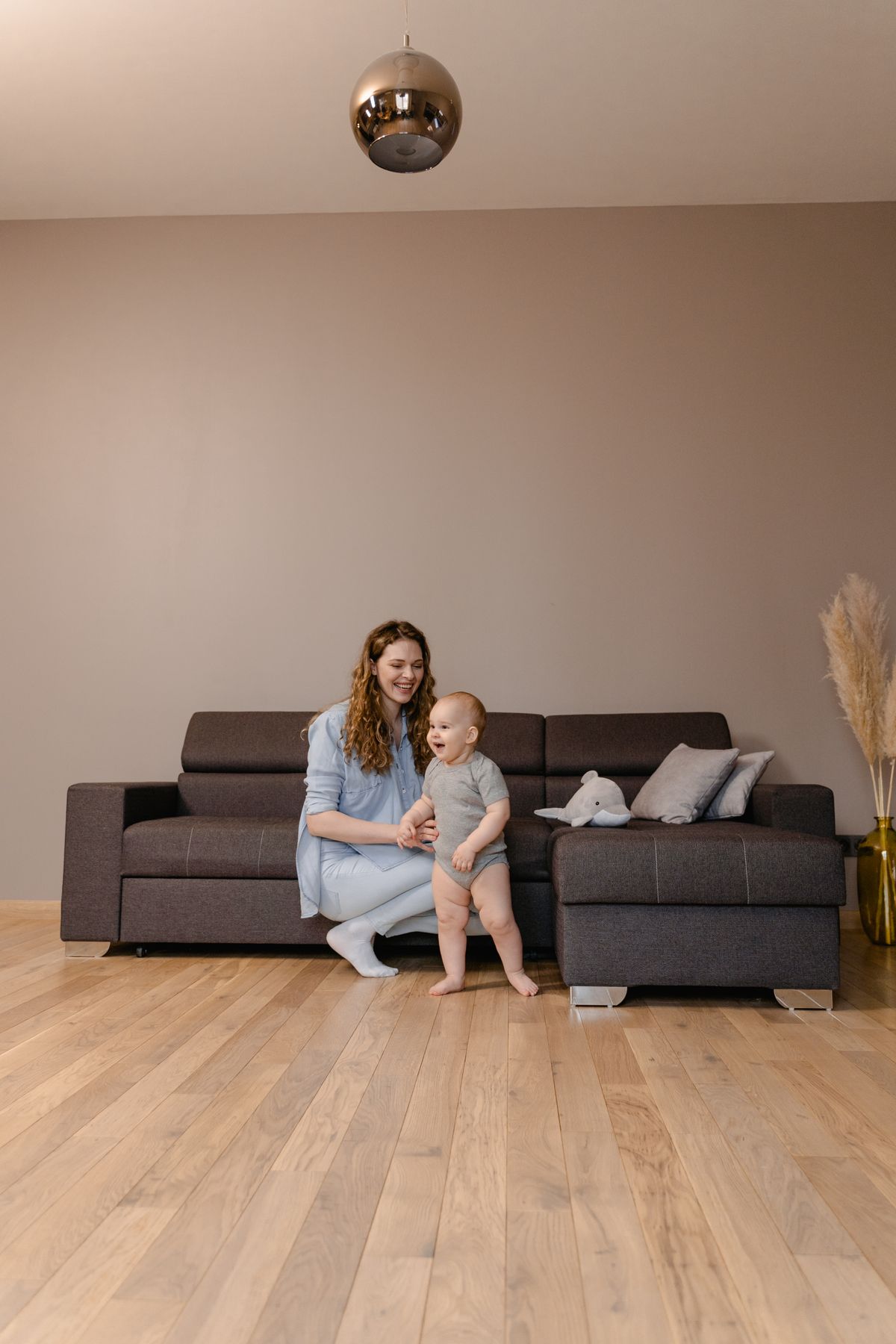
Gentle parenting gets misunderstood a lot, usually as "no rules" or "no consequences." In practice, it's closer to the opposite. It's built on clear, consistent structure — the difference is how that structure gets enforced. Instead of controlling behavior through fear or punishment, gentle parenting focuses on connection, communication, and understanding the reason behind a child's behavior, while still holding firm, predictable boundaries.
The part that trips most parents up isn't the philosophy — it's translating it into daily practice when a child is mid-meltdown in a grocery store and there's no time to think about parenting theory. That's where routines matter more than any single conversation. A predictable daily structure does most of the emotional regulation work before a hard moment ever happens.
What gentle parenting actually is (and isn't)
Gentle parenting is not the same as permissive parenting. Permissive parenting avoids conflict by dropping boundaries. Gentle parenting keeps the boundaries firm but changes the delivery — explaining the "why" behind a rule, validating the child's feelings even while holding the limit, and treating misbehavior as a signal of an unmet need or undeveloped skill rather than defiance to be punished.
In practice, that looks like: "You're really upset you have to leave the park. It's hard to stop playing. We still need to go now — I'll count you down from five" — rather than either giving in to avoid the tantrum, or responding to the tantrum with punishment.
Why routine matters more than any single technique
A lot of gentle parenting advice focuses on what to say in the moment of conflict. That matters, but it's the smaller half of the picture. Most meltdowns and power struggles are more preventable than they are manageable — and prevention comes from predictability. Children (and honestly, most adults) regulate better when they know roughly what's coming next. A consistent routine removes a huge share of the uncertainty that triggers dysregulation in the first place.
This is why a strong daily routine does more for a household's emotional climate than any single well-executed conversation during a meltdown.
Building a gentle parenting routine: the core pieces
1. Predictable transition points
Transitions — leaving the house, ending screen time, going to bed — are where most conflict happens, because they ask a child to stop something they're engaged in. Giving advance warning ("five more minutes, then we clean up") and keeping the same transition ritual every day (a specific song, a countdown, a consistent phrase) turns an abrupt demand into an expected event the child's nervous system is already prepared for.
2. Connection before correction
Building in small, consistent moments of undivided attention — even five to ten minutes of child-led play with no phone, no multitasking — fills what's sometimes called a child's "connection cup." A child whose need for attention is being met consistently throughout the day generally needs less attention-seeking behavior to get it, which in practice means fewer power struggles later.
3. Consistent boundaries, flexible delivery
The rule itself shouldn't change day to day — bedtime is bedtime, screen limits are screen limits. What can flex is tone, timing of the warning, and how much choice is offered within the boundary ("do you want to brush teeth first or put on pajamas first?"). Consistency in the rule with flexibility in the delivery is what separates gentle parenting from either rigid authoritarian parenting or boundary-less permissive parenting.
4. Milestone and development tracking
Gentle parenting leans heavily on understanding why a child is behaving a certain way — and a lot of "misbehavior" is actually a normal developmental stage rather than a character issue. Keeping a light record of developmental milestones and typical behaviors for a child's age makes it easier to respond to a phase with age-appropriate expectations instead of frustration.
5. Parental self-reflection
Gentle parenting asks a lot of the parent — staying regulated while a child is dysregulated is genuinely difficult, especially repeatedly, day after day. A short weekly reflection (what triggered you this week, what worked, what you want to try differently) isn't optional extra credit — it's part of the system. Parents who build in a regular check-in tend to sustain the approach longer than those relying purely on in-the-moment willpower.
A simple daily structure that supports this approach
Put together, a gentle-parenting-friendly daily routine tends to include:
- A consistent wake-up and morning sequence (same order of events each day)
- Advance warnings before every transition, not just the hard ones
- At least one block of dedicated, child-led connection time
- Consistent, clearly stated boundaries — with choices offered within them
- A predictable wind-down and bedtime sequence
- A light log of milestones, behaviors, or things worth remembering
- A weekly parent self-reflection, even five minutes
None of this requires perfection — gentle parenting explicitly expects rupture and repair, not flawless execution. What it does require is enough structure that the good intentions have somewhere consistent to land, rather than being reinvented from scratch every day under stress.
Where a Parent Planner fits in
A Parent Planner is built around exactly this structure — weekly routines, milestone tracking, health records, and a dedicated space for parental self-reflection, so the emotional and logistical sides of gentle parenting live in one place instead of scattered across memory and good intentions.
If the household logistics — shared schedules, chores, coordinating with a partner — are the bigger daily challenge, a Family Planner handles that operational layer alongside the parenting one. And for the weekly self-reflection piece specifically, a Reflection Planner offers guided prompts built for exactly that kind of check-in.
Ready to build the routine? The Parent Planner gives you a printable, structured way to track routines, milestones, and your own reflection — a low-stress system for staying consistent, even on the harder days.