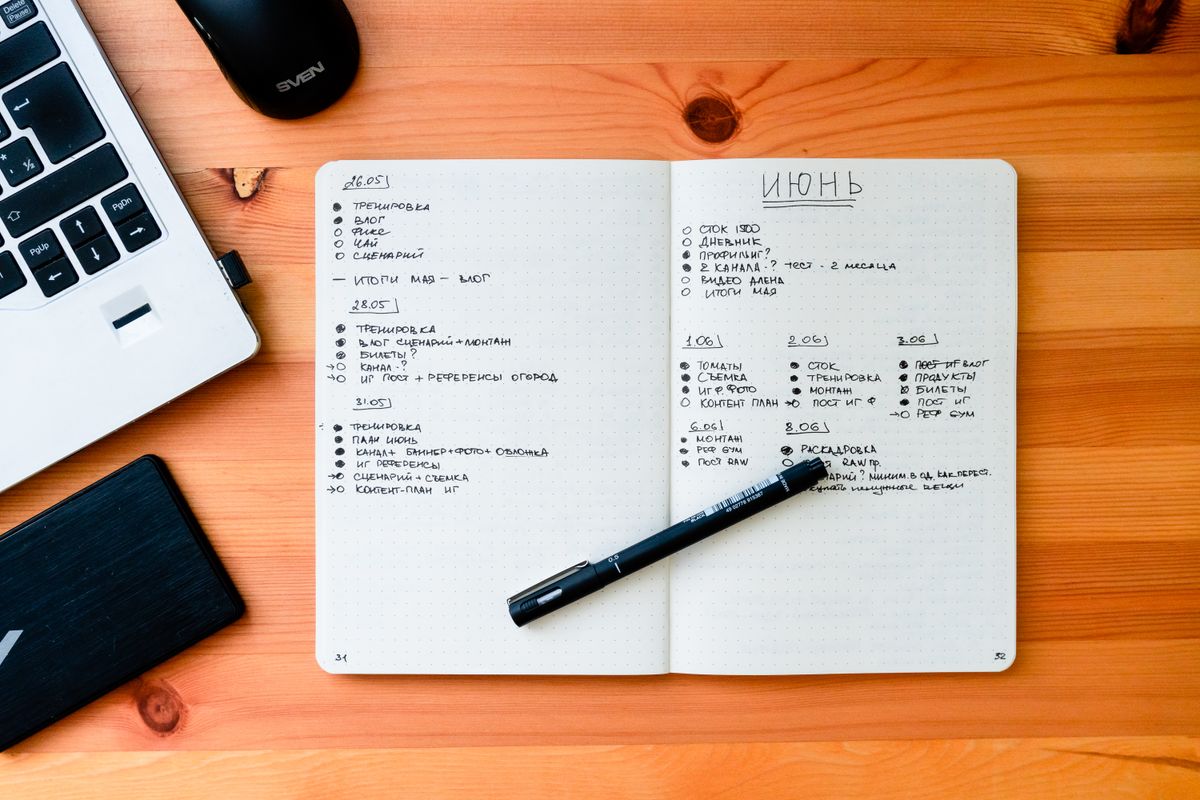
Walk into any planner aisle — or scroll any planner shop online — and you'll find dozens of layouts, all promising to fix your chaos. Daily planners, weekly planners, budget planners, fitness planners, meal planners. It's easy to buy the prettiest one and abandon it three weeks later because it never actually matched how you think.
The truth is simple: the best planner isn't the most popular one, it's the one built around the specific problem you're trying to solve. Before you pick a layout, it helps to get clear on two things — what part of your life feels the most unmanaged right now, and how your brain naturally likes to process information (big-picture vs. detail-by-detail, visual vs. list-based, rigid structure vs. flexible).
This guide walks through both, so you can match yourself to a planner instead of guessing.
Step 1: Identify what's actually unmanaged
Most people don't need "a planner." They need help with one specific area that's spilling into everything else. Ask yourself which of these sounds most like you right now:
- "My days feel scattered and I never get to what matters." → You need structure around daily priorities and time.
- "I want to build better habits but keep losing momentum." → You need a routine and habit-tracking system.
- "Money stresses me out and I avoid looking at it." → You need a budgeting system that's visual, not spreadsheet-heavy.
- "I'm trying to get healthier but have no way to see progress." → You need a fitness or health tracker.
- "Between work, kids, and the house, nothing feels coordinated." → You need a family or parenting system.
- "I run my own business/freelance and things fall through the cracks." → You need a business or freelance operations planner.
- "I keep meaning to reflect on my life but never do." → You need a reflection/journaling structure, not a scheduler.
- "I have a big one-time thing coming up (move, wedding, holiday) and I'm overwhelmed." → You need a project-based planner, not a recurring one.
If more than one of these resonates, that's normal — most people eventually run two systems side by side (for example, a Daily Planner for the week-to-week, plus a Budget Planner for money). Start with whichever one is causing the most stress today.
Step 2: Match the problem to a planner type
Here's how that maps to a real system:
If your days feel scattered → the Daily Planner
Built for people who lose the day to whatever's loudest instead of what's most important. A good daily planner gives you a place to name your top 1–3 priorities before the day starts, block time for them, and track habits alongside your schedule — so you're not juggling five different notes apps. See the Daily Planner
If you want structure without rigidity → the Lifestyle Planner
For people who don't want a planner that only does one job. A lifestyle planner blends scheduling, goals, and personal tracking into one flexible system — good for anyone who resists overly regimented formats but still wants to feel organized. See the Lifestyle Planner
If money is the source of your stress → the Budget Planner
Designed to make finances visual instead of intimidating. Tracks income, expenses, savings goals, and spending patterns without requiring a background in spreadsheets. See the Budget Planner
If you're trying to get consistent with health → the Fitness Planner or Health Planner
The Fitness Planner is built around workout tracking, goal-setting, and progress logs for anyone building strength or consistency. The Health Planner takes a broader view — sleep, water, symptoms, appointments, mental wellbeing — for people managing overall wellness, not just exercise. See the Fitness Planner · See the Health Planner
If mealtimes are chaotic → the Meal Planner
Weekly meal grids, grocery lists, and prep tracking in one place — built for anyone tired of the 5 p.m. "what's for dinner" scramble. See the Meal Planner
If you're parenting and the household feels uncoordinated → the Parent Planner or Family Planner
The Parent Planner focuses on routines, milestones, and gentle-parenting reflection — built for the emotional and developmental side of raising kids. The Family Planner is more operational — shared schedules, chores, and household logistics for the whole family unit. See the Parent Planner · See the Family Planner
If you run a business or freelance → the Business Planner or Freelance Planner
The Business Planner is built for tracking goals, projects, and performance at a company level. The Freelance Planner is scoped for solo operators — client work, invoicing rhythms, and time management without a team behind you. See the Business Planner · See the Freelance Planner
If you're a student or managing a student → the School Planner
Built around assignments, exam prep, and term-based structure rather than open-ended weekly planning. See the School Planner
If you want to actually reflect, not just schedule → the Reflection Planner
This one skips the to-do list entirely and focuses on prompts, gratitude, and self-check-ins — for people who want a planner that slows them down rather than speeds them up. See the Reflection Planner
If you have a one-time big event coming up → the Event Planner, Moving Planner, or Holiday/Advent Planner
These are project planners, not daily-use systems — built to be used intensely for a few weeks and then set aside. The Event Planner covers weddings and parties, the Moving Planner covers relocations, and the Holiday/Advent Planners cover seasonal prep from gift lists to countdown trackers. See the Event Planner · See the Moving Planner · See the Holiday Planner · See the Advent Planner
If you can't commit to just one thing → the Action/Priority Planner
For people who have a dozen goals across different areas of life and need one system to triage all of it into "what matters this week." See the Priority Planner
Step 3: Think about how you actually process information
Two people can have the exact same problem and need completely different formats:
- List-driven people want checkboxes, clear daily/weekly grids, and minimal open space. They abandon planners with too many blank pages.
- Visual/reflective people want prompts, space to write freely, and less rigid structure. A dense checklist format feels stressful to them, not helpful.
- Big-picture people do better starting with a monthly or seasonal overview before drilling into weekly detail.
- Detail-oriented people want to go straight into daily blocks and specific trackers.
If you're not sure which you are, a good rule of thumb: if you've abandoned planners before because they felt "too busy," you're likely a visual/reflective type and should lean toward planners like the Reflection or Lifestyle Planner. If you've abandoned planners because they felt "too vague" and you never knew what to actually write, you're a list-driven type and should lean toward the Daily, Budget, or Fitness Planner.
Why printable planners specifically
A printable, instant-download planner has a few practical advantages over a bound book or a purely digital app:
- You print only what you need, so a system that isn't working for you doesn't cost you a wasted purchase — you just print a different one.
- No app fatigue. Physically writing things down has been linked to better recall and follow-through than typing them into an app you can silently swipe away from.
- You can combine systems. Printing a Daily Planner alongside a Budget Planner costs nothing extra once you own both, so you're not locked into one all-in-one book that does everything adequately and nothing well.
Final tip: start with one, not five
The biggest reason planners get abandoned isn't a bad layout — it's trying to run too many systems at once. Pick the single planner that matches your biggest pain point right now, use it consistently for two to three weeks, and only then decide if you need a second system running alongside it.
Ready to start? Browse the full planner collection and find the one that matches where you're at.